
Australia is a continent defined by its light. From the fiery oranges of the Outback to the soft pastel pinks reflecting off the Pacific and Indian Oceans, Australia’s sunset is a daily masterpiece. Whether you are a hobbyist photographer, a couple planning a romantic getaway, or a bride-to-be looking for the perfect sunset spots for your wedding photos, this guide will provide everything you need to know about “hunting” the sun in Australia’s major cities.
1. Professional Tips for Catching the Perfect Sunset
A breathtaking sunset isn’t just a stroke of luck; it’s a result of specific atmospheric conditions. Here is how you can “read” the weather to ensure you never miss a spectacular show.
How to Choose the Perfect Day: The Science of “Burn”
Not every day is created equal. To find a day with a high probability of a “vibrant burn”, look for these indicators on your weather app:
- The “After-Storm” Magic: Some of the most incredible sunsets occur right as a storm front is moving out. As the rain clears, it washes the dust out of the air, and the breaking clouds create gaps for the sun to illuminate the sky from underneath.
- Humidity Matters: Low to moderate humidity is usually best. If the air is too “soupy” (very high humidity), the light gets scattered and looks hazy or grey. If it’s too dry, you might lose those deep, saturated colours.
- Air Quality: While a bit of sea salt or light dust can help scatter light to create colours, heavy smog or thick smoke (like during bushfire season) often “muffles” the sun, making it look like a dull red orb rather than a glowing sky.
Temperature and the “Perfect Glow”
There is a common misconception that hot days lead to better sunsets. In reality, temperature plays a subtle but vital role:
- The “Goldilocks” Temperature: Most professional photographers prefer days where the maximum temperature is moderate (between 20°C and 27°C). On these days, the air is stable enough to keep the atmosphere clear but warm enough to hold some moisture for cloud formation.
- High Heat (Above 35°C): Extreme heat often creates “heat haze”. This can make the horizon look blurry. However, very hot days often end with a “dry line” or a cool change in Australia (especially in Melbourne or Adelaide), which can trigger spectacular, fiery cloud formations.
- Cold Snaps: Don’t ignore winter! Cold air is denser and cleaner. When the temperature drops, the colours often appear much “sharper” and more defined, giving you those deep violets and magentas that you don’t often see in the summer.
The “Cloud Ceiling” Secret
Check the cloud altitude. You are looking for Middle and High clouds (Altocumulus and Cirrus).
- High clouds (above 6,000 m) are like a canvas; they catch the sunlight long after the sun has set for us on the ground.
- Low, thick clouds (below 2,000 m) are “sunset killers”—they act like a thick blanket that blocks the light entirely. If the sky is 100% covered in low grey clouds, it’s better to stay home and edit your previous photos!
Timing is Everything: The 20-Minute Rule
Many people pack up their gear as soon as the sun dips below the horizon. This is a rookie mistake. The most vibrant colours—the deep purples and fiery reds—often appear 15 to 20 minutes after the sun has disappeared. This is known as the civil twilight.
Essential Gear & Settings
- Tripod: Essential for low-light shots after the sun sets.
- Aperture: For sharp landscapes, stay between $f/8$ and $f/11$.
- White Balance: Switch from “Auto” to “Cloudy” or “Shade” to enhance the warm orange and golden tones manually.
- Exposure: Underexpose slightly ($-0.7$ or $-1.0$ EV) to make the colours of the sky “pop” without blowing out the highlights.
2. Iconic Sunset Spots in Australia’s Major Cities
Each Australian city offers a unique “flavour” of sunset, from urban skylines to rugged coastal cliffs.
Sydney: The Harbour Masterpiece
Sydney is all about the interaction between the urban skyline and the water.
- Mrs Macquarie’s Chair: The “classic” shot. You get the Sydney Opera House and the Harbour Bridge in a single frame as the sun sets behind them.

- Observatory Hill: A favourite for locals. It offers an elevated view of the Harbour Bridge with a beautiful rotunda and ancient Moreton Bay Fig trees.
- Watsons Bay: For a more coastal feel, head to The Gap. You can watch the sun set over the city skyline from across the water.
- Milk Beach: The best place for a picnic and to enjoy a beautiful sunset with a view of the Harbour Bridge and Opera House.

Melbourne: Artistic & Moody
Melbourne’s weather is famous for being unpredictable, which often results in the most dramatic, moody skies.
- St Kilda Pier: Watch the sun set behind the sailboats, and if you stay late enough, you might see the fairy penguins returning to the breakwater.
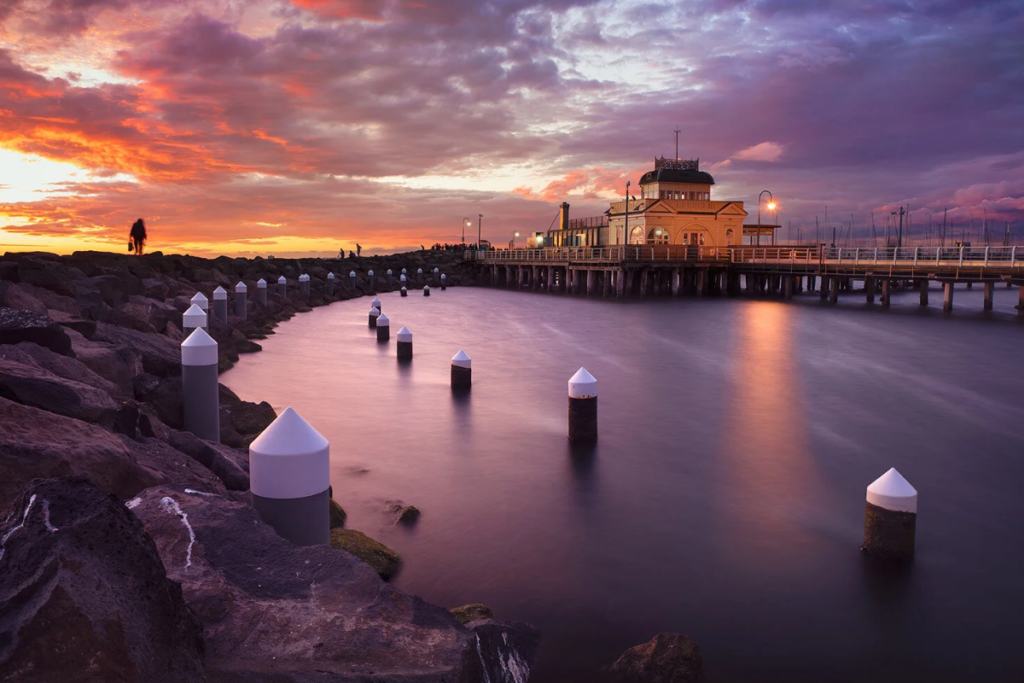
- Princes Pier (Port Melbourne): The weathered wooden pylons of the old pier provide incredible leading lines for a long-exposure sunset shot.
- Skyhigh Mt Dandenong: For a panoramic view of the entire city’s lights flickering to life as the sun goes down.
- Albert Park Lake: Admire the stunning city by the lake at sunset.
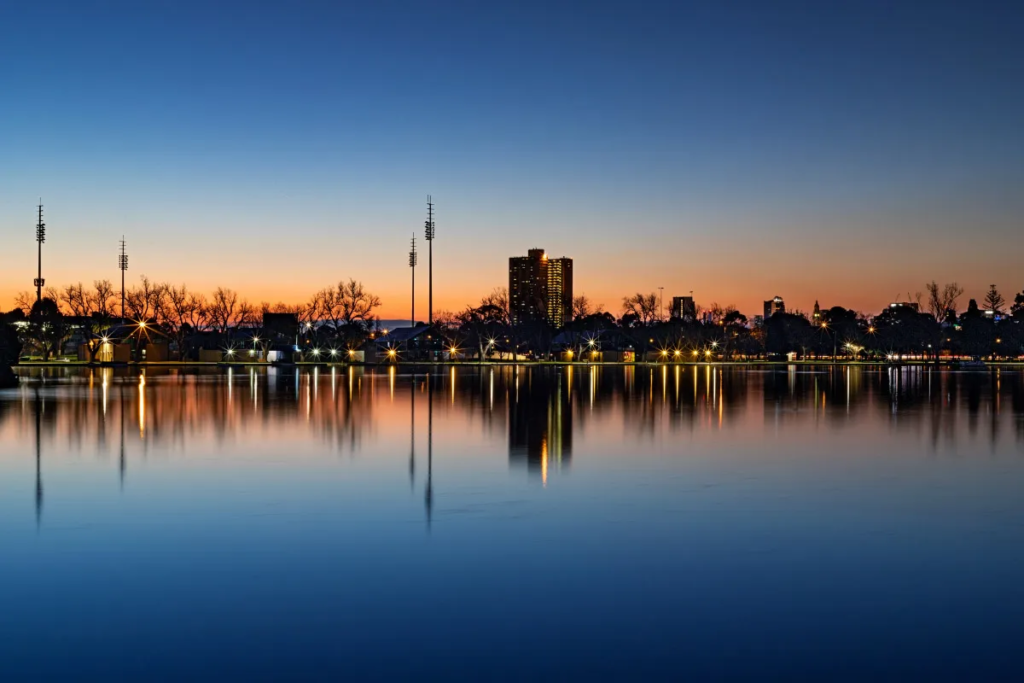
Gold Coast: The Glitter Strip
In Queensland, the “Golden Hour” feels literal. The light here is exceptionally bright and clean.
- Burleigh Heads: Walk up to the hill for a view that looks back towards the Surfers Paradise skyline. The contrast between the rolling surf and the skyscrapers is unmatched.

- The Spit: A great spot for a more industrial-meets-nature vibe, with the long jetty reaching out into the Pacific.

- Tamborine Mountain: A short drive inland to the “Hang Glider Lookout” offers a vast view of the valley bathed in gold.
- Currumbin Beach: Spectacular sunset views, particularly from the vantage point of Elephant Rock, with the city skyline often visible in the distance.

Perth: The King of Sunsets
Perth is the only major capital city where you can watch the sun set directly into the ocean.
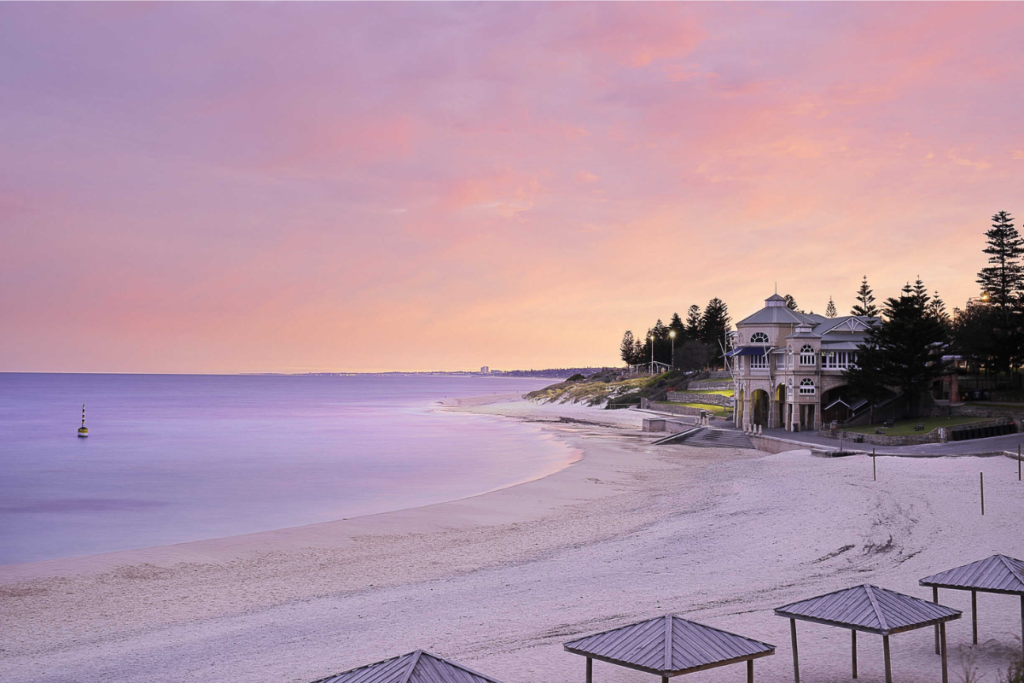
- Cottesloe Beach: The most iconic sunset spot. The silhouette of the Indiana Tea House against a West Australian sunset is a “bucket list” photo.
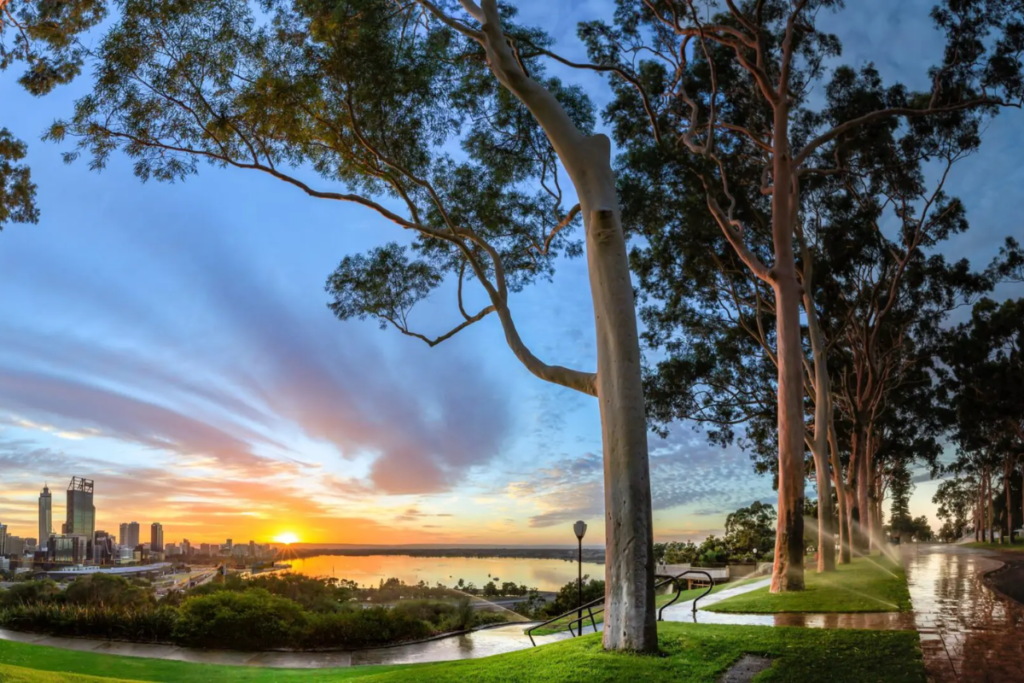
- Kings Park: Offers an elevated sunset view of the Swan River and the CBD. The reflection of the orange sky on the river is breathtaking.
- Zig Zag Scenic Drive: Located in the Perth Hills, this provides a massive view of the entire coastal plain.
Adelaide: Coastal Serenity
Adelaide’s sunsets are long and lingering, perfect for slow-paced photography.
- Glenelg Jetty: A classic South Australian view. The jetty provides a perfect silhouette against the Gulf St Vincent.
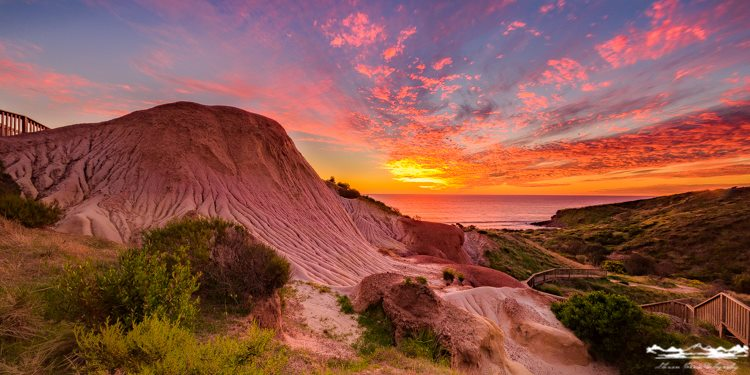
- Hallett Cove Conservation Park: The unique “Sugarloaf” rock formations and rugged cliffs turn deep shades of red and gold.
Canberra: The Bush Capital
Canberra offers a unique inland sunset experience characterised by clear air and mountain silhouettes.
- Mount Ainslie: The best sunset spot to see the “Parliamentary Triangle” align as the sun sets behind the Brindabella Ranges.
- Lake Burley Griffin: The Carillon and the National Museum provide great architectural elements to frame your sunset.

3. Best Seasons for Sunset Wedding Photography in Australia
If you are planning a wedding or an engagement shoot, the “quality” of light changes significantly with the seasons.
The “Golden Window”: Autumn (March – May)
Autumn is the best season for wedding photography in Australia.
- The Light: The sun sits lower in the sky, meaning the “Golden Hour” lasts longer and the light is softer and more flattering for skin tones.
- Weather: Stable weather with less wind and lower humidity compared to summer.
- Aesthetics: In cities like Melbourne, Canberra, and Adelaide, the changing leaves add a romantic, European feel to your photos.
The “Vibrant Choice”: Spring (September – November)
Spring is the most popular time for Australian weddings.
- The Vibe: Everything is in bloom (especially the Jacarandas in Sydney and Perth in late October/November).
- The Light: Very “clean” and crisp. However, be prepared for occasional “spring winds” that can be tricky for hair and veils.
Summer (December – February) vs. Winter (June – August)
- Summer: The sun sets very late (around 8:30 PM in southern cities). The light is harsh until very late, but the “Blue Hour” (post-sunset) is incredibly long and beautiful.
- Winter: The sun sets as early as 5:00 PM. While it’s cold, the air is often at its clearest, leading to incredibly sharp photos and deep, saturated colours in the sky.
Conclusion
Australia is a playground for anyone who loves the magic of twilight. From the urban elegance of Sydney to the raw ocean horizons of Perth, there is a sunset for every soul. Remember to stay patient, watch the clouds, and always keep shooting even after the sun has disappeared.