Uluru – the massive sandstone monolith standing proudly in the Australian Outback – is far more than a geological wonder. It is the spiritual heart of the Land Down Under, holding thousands of years of history, culture, and belief systems of the Anangu Aboriginal people.
If you are planning a trip to Australia, especially the Northern Territory, a visit to Uluru-Kata Tjuta National Park is a profound experience that will change the way you see the land and its culture.
Here is everything you need to know to have the most fulfilling and respectful trip to Uluru.
I. What is Uluru? (History and Geology)
1. The Unique Monolith
- Names: Widely known historically as Ayers Rock (named after politician Henry Ayers), the official and preferred name is Uluru, derived from the local Aboriginal language.
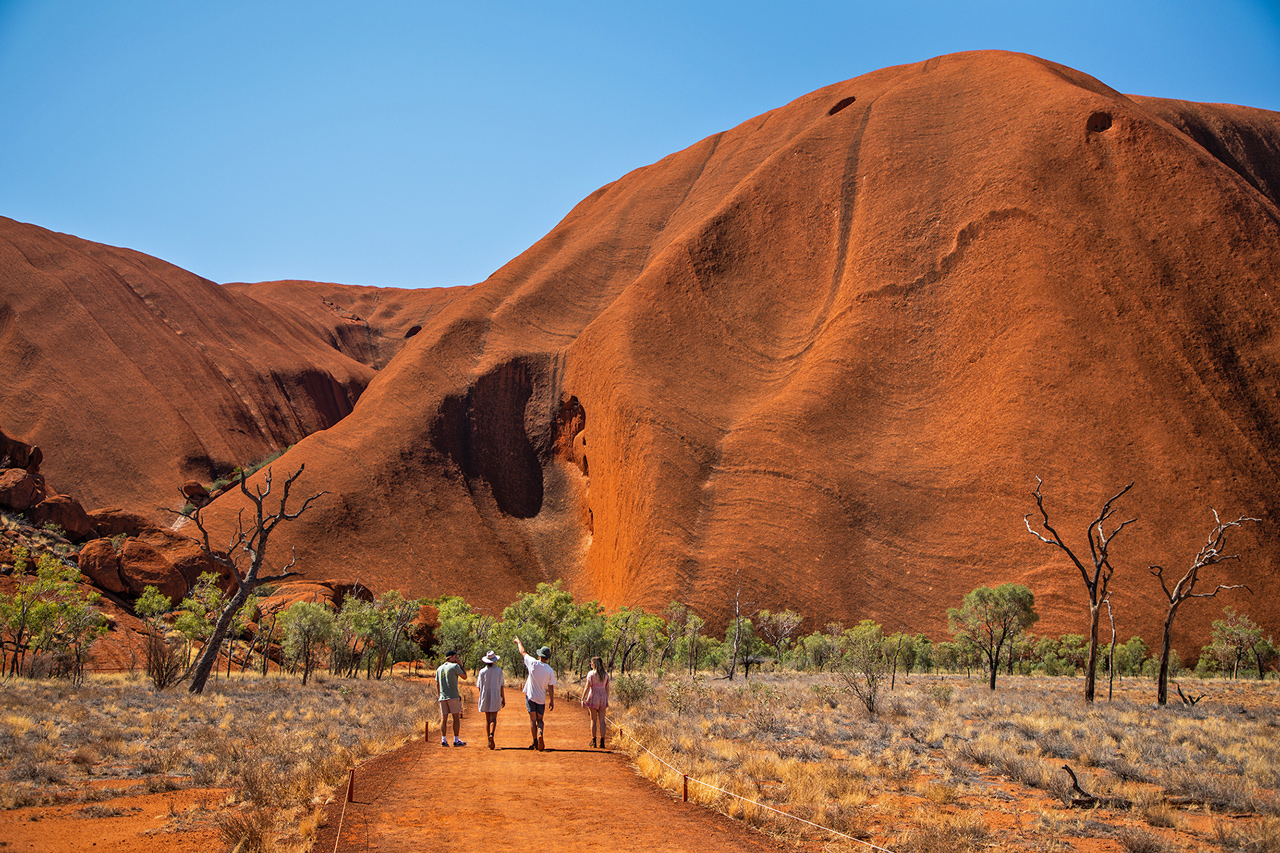
- Impressive Size: It stands 348 metres high (taller than the Eiffel Tower!), with a circumference of 9.4 km. Astonishingly, the majority of the rock mass lies beneath the desert surface.
- Geology: Uluru is composed of arkose sandstone, which began forming on a seabed over 550 million years ago. Its striking red colour is due to the oxidation of iron, creating a breathtaking spectacle under the sun.
2. Traditional Owners
Uluru-Kata Tjuta National Park is the traditional home of the Anangu people, who have lived in this area for over 30,000 years. They lease the land back to the Australian government for the park’s joint management and preservation.
II. Why Uluru is Sacred (The Tjukurpa Culture)
For the Anangu people, Uluru is an immensely sacred site, intrinsically linked to Tjukurpa (often translated as “The Law” or “The Dreaming”).
- Tjukurpa: This is not just a religion or myth; it is the entire system of knowledge, law, and ceremonies that explains the creation of the world, people, and nature. Uluru is the physical site of these ancestral beings’ creative events.
- Caves and Paintings: Around the base of Uluru are various caves and rock shelters containing paintings that recount Tjukurpa stories, often used as sites for important ceremonies.
- The Climb Prohibition: As of October 2019, climbing Uluru is officially banned. This was a major victory for the Anangu. They view climbing as a deeply disrespectful act, as the path itself is a sacred ceremonial route. Their simple message is: “We don’t climb, and you shouldn’t either.”
III. 5 Absolute Must-Do Experiences at Uluru
If you can’t climb, what do you do? Plenty! These experiences offer a much deeper and more spectacular view than standing on the summit:
1. Sunrise and Sunset Viewings (The Colour Change)
This is the quintessential Uluru experience. The rock absorbs and reflects the sun’s light, causing it to change colours spectacularly from deep grey, to purple, to burning ochre and fiery red. Designated viewing areas are provided for the perfect angle.
2. The Base Walk
The 9.4 km walk around the entire circumference of Uluru is the best way to truly appreciate its scale and spirituality.
- Tip: Start early in the morning or late afternoon to avoid the intense desert heat.
- Highlights: Visit the Mutitjulu waterhole and the ancient rock art sites.
3. Discover Kata Tjuta (The Olgas)
Located about 50 km from Uluru is Kata Tjuta (meaning “Many Heads”), a group of 36 dome-shaped sandstone formations that are geologically even more impressive.
- Must-Try Experience: Hike through the Valley of the Winds Walk to witness the deep gorges and unique desert vegetation.
4. Visit the Cultural Centre
Make this your first stop! Managed by the Anangu people, the centre provides invaluable information about Tjukurpa, local history, and biology. Purchasing authentic Aboriginal crafts here is a wonderful way to support the community.
5. Dine Under the Stars (Sounds of Silence / Field of Light)
- Sounds of Silence: A luxurious dinner under the expansive Outback night sky, complete with storytelling about constellations and Aboriginal culture.
- Field of Light: A massive art installation by Bruce Munro, featuring 50,000 solar-powered lights illuminating the desert at night. A truly surreal sight.
IV. Practical Tips for Your Journey
| Item | Detail |
| Best Time to Visit | May to September (winter months) to avoid the scorching summer temperatures. |
| Accommodation | Ayers Rock Resort (Yulara) is the only accommodation hub nearby, offering everything from camping to 5-star hotels. |
| Getting There | Fly into Uluru/Ayers Rock Airport (AYQ). Renting a car is the best way to navigate between Uluru and Kata Tjuta. |
| Crucial Advice | Always carry a hat, sunscreen, and at least 3 litres of water per day. Respect the designated sacred sites where photography is prohibited. |
Conclusion: More Than Just a Rock
Uluru is living proof of the deep connection between people and the land. A visit to Uluru is not merely a sightseeing trip; it is a lesson in respect, patience, and the enduring beauty of Australia’s Aboriginal culture.
Are you ready to feel the energy of Australia’s spiritual heart?
Share in the comments which Uluru experience you are most excited about!